The Cheapest Nitrogen is the Nitrogen you Never Pull In
Landfill-gas-to-RNG projects often spend tens of millions of dollars removing nitrogen from landfill gas. Much of this cost addresses a problem originating in the wellfield rather than in the waste itself. According to the U.S. Environmental Protection Agency (EPA), raw landfill gas typically contains about 50% methane and 50% carbon dioxide. Each nitrogen molecule detected at the wellhead came from atmospheric air, initially trapped with the waste and later drawn in by the vacuum from the gas collection blowers. A field reading of 9% nitrogen indicates that roughly 11% of the total volume is ambient air, which must then be dried, compressed, and separated during downstream purification. The oxygen introduced with this air is consumed by aerobic bacteria near the intrusion point, thereby producing additional CO₂.
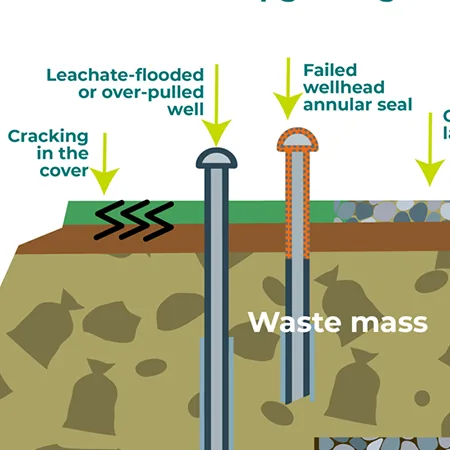
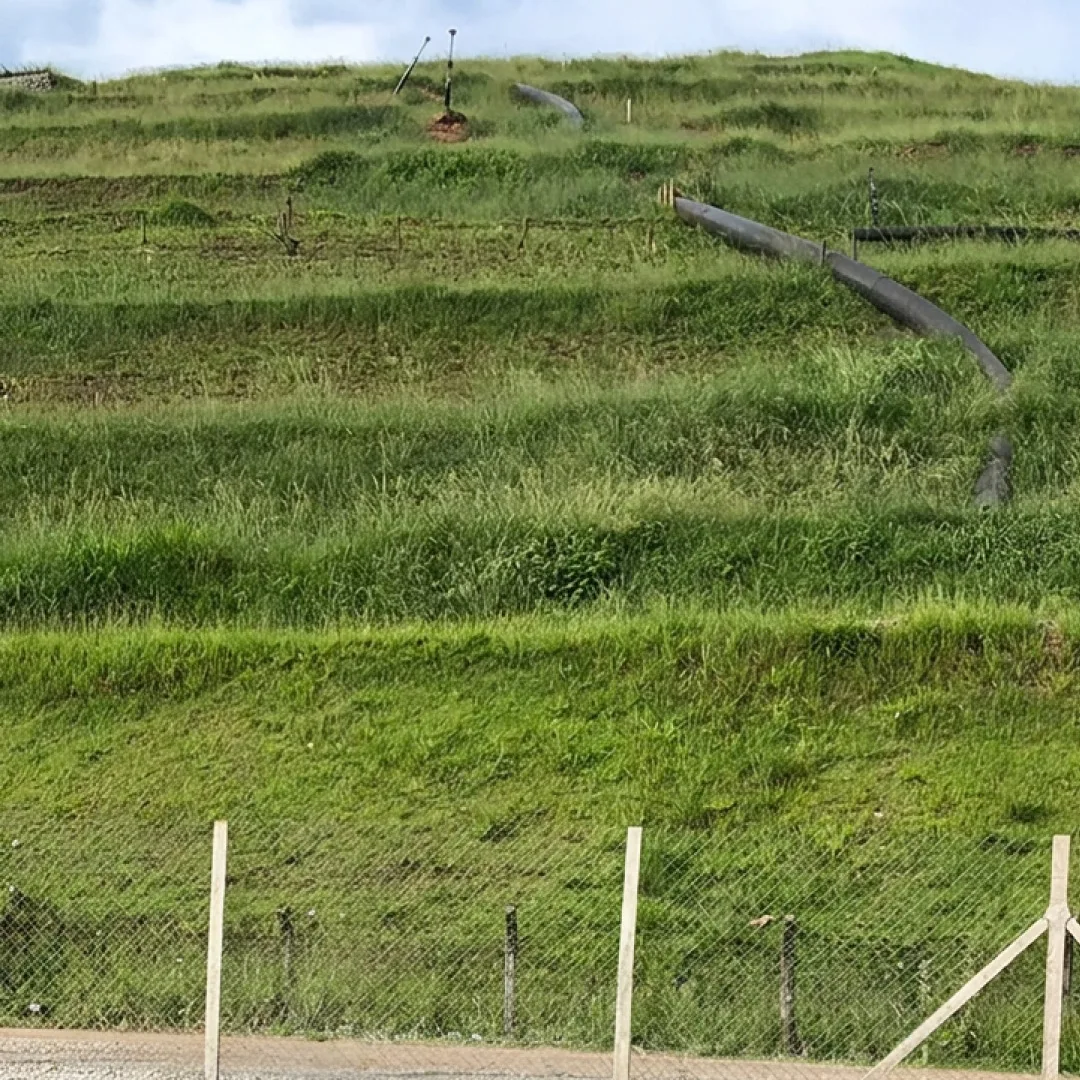
Air enters through landfill cover defects, failed wellhead seals, leachate-flooded wells, over-extraction, and buried granular layers like gravel access roads. Managing air intrusion isn’t just about adjusting the wellfield; reducing wellfield vacuum can limit air entry but may also decrease gas recovery. Methane capture drops because the same vacuum that pulls in air also pulls in methane. Repairing seals and covers, dewatering, and sealing cutoff valves—along with regular or automated tuning—address leaks at their source, improving methane capture and increasing revenue from the landfill. Keeping air out in the Gas Collection and Control System (GCCS) can be 2 to 5 times less expensive than removing it downstream, depending on the cost of GCCS improvements.
6 Common Air Intrusion Pathways that Increase Nitrogen Levels and Upgrading Costs
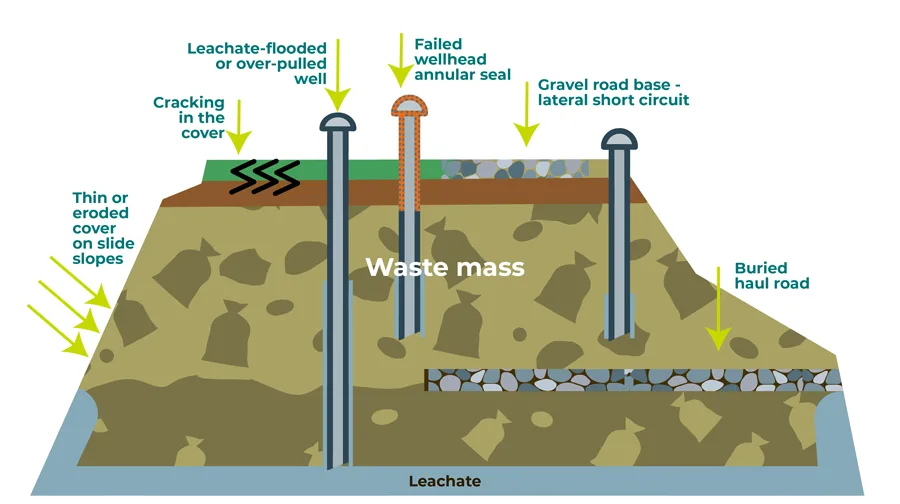
Ivys works with your GCCS operator to discuss air-intrusion mitigation against NRU sizing before the equipment is specified, so you are not paying for twenty years of nitrogen rejection to compensate for a problem that could be fixed at the surface.
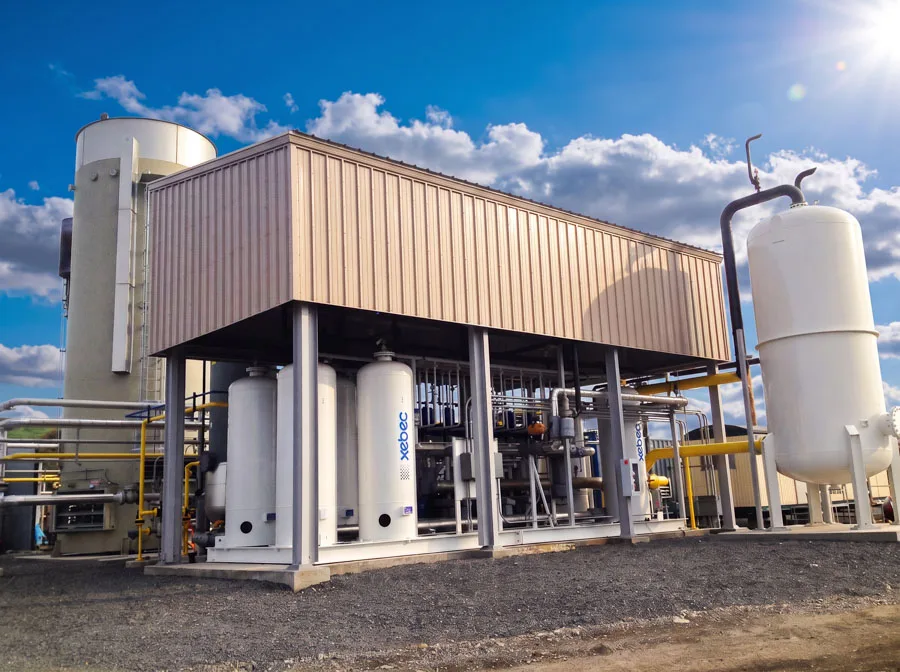
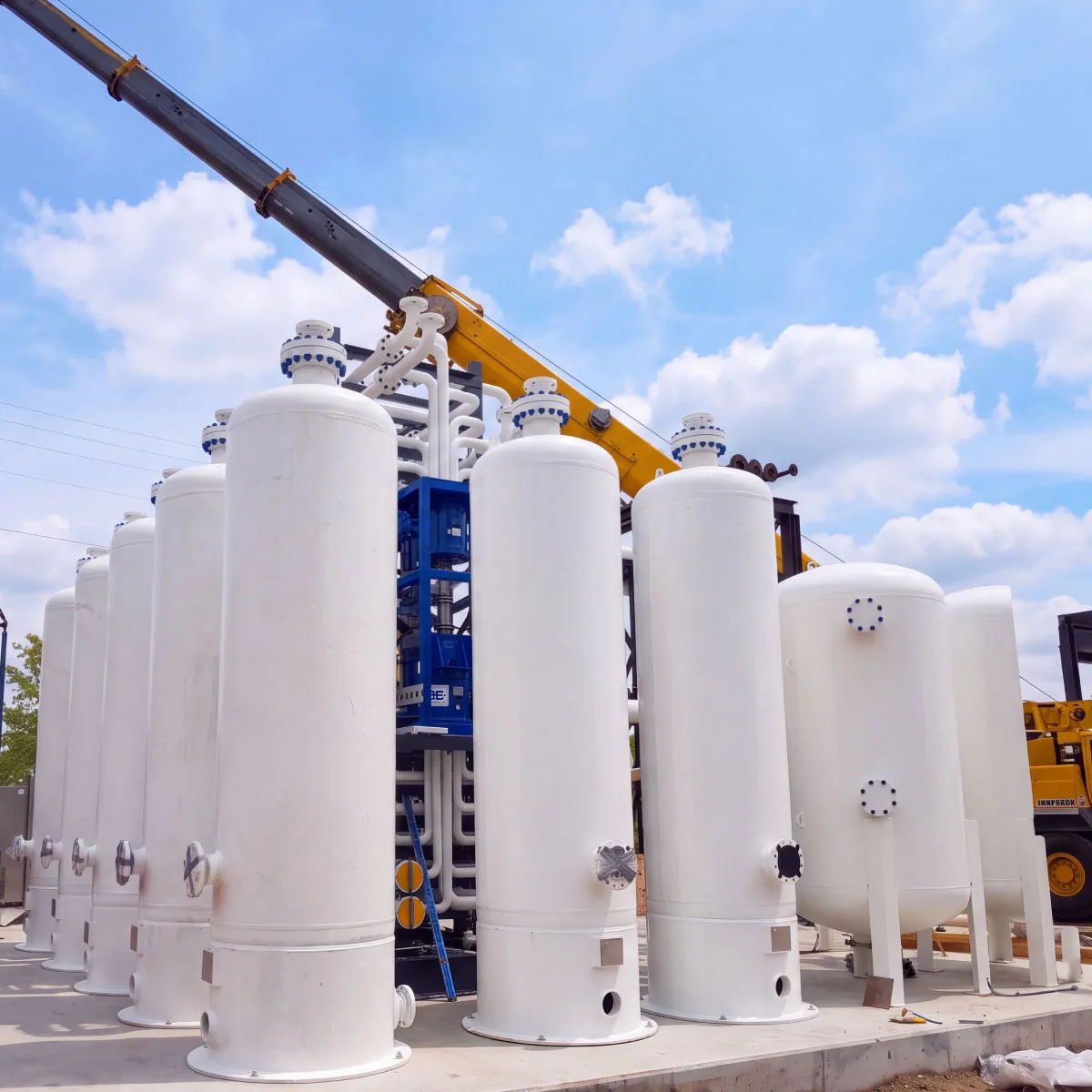
Removing nitrogen from gas entering the upgrading facility is challenging once it’s present, as some methane slip is unavoidable during separation, reducing project revenues. Ivys’s fast-cycle rotary valve Pressure Swing Adsorption (PSA) system isolates CO2, O2, and N2 in a single-stage or multiple-stage process for the site-specific nitrogen level. However, higher nitrogen content increases costs and reduces project feasibility, especially at smaller landfills. An industry analysis by SCS titled “Revisiting the Incremental Cost of Nitrogen Removal for Landfill Gas-to-RNG Projects” on a 4,000 scfm plant showed that adding nitrogen removal raised construction expenses from $19 million to $30 million USD, about 37% of total system costs. Power consumption over the facility’s lifespan also increased by approximately 20%, while methane recovery decreased by 2 percentage points due to the additional nitrogen removal stage.
While nitrogen must be removed, to reduce the total cost of ownership of the upgrading facility over its lifetime, operators should evaluate both capital expenses and operational upgrades that minimize air intrusion. This involves identifying air intake paths, sealing leaks, and monitoring nitrogen levels for several months to properly size equipment to the lower, post-mitigation nitrogen concentrations. For smaller landfill gas projects, removing pathways for air intrusion enhances both profitability and feasibility, making them more attractive to pursue.
A common, costly error is selecting equipment that commits the operator to twenty years of capital expenditure, increased energy consumption, and decreased methane recovery—when simpler, less costly surface repairs could provide more affordable alternatives.
Ivys’s engineers work with your GCCS operator to discuss air-intrusion mitigation efforts against nitrogen removal during upgrading before sizing and specifying equipment. Our engineers size equipment based on the nitrogen levels expected throughout the life of a well-managed wellfield, not just at current levels. When selecting upgrading equipment, the goal should be to maximize profit rather than minimize the NRU. Landfill gas with minimized air entry incurs significantly lower upgrade costs.