American Landfill, Waynesburg, Ohio
Bulk CO₂ Removal between Compressor Stages
Project details
Technology: PSA only
Commissioned: 2014
Biogas Source: Landfill
Use: Blending for pipeline injection
Specifications
Capacity: 4820 Nm³/h / 3000 SCFM
Raw Gas Composition: 52% CH₄, 36% CO₂,
9–11% N₂, trace O₂, 50ppm H₂S, 100%RH
Design Specifications RNG / Biomethane: 83% CH₄
Power Consumption of Biogas Upgrading Plant:
0.42 – 0.48 kW/scfm (0.26 – 0.30 kWh/NCM) raw biogas
Bulk CO2 removal inside a compressor train: IVYS PSA at an Ohio landfill-gas-to-pipeline plant
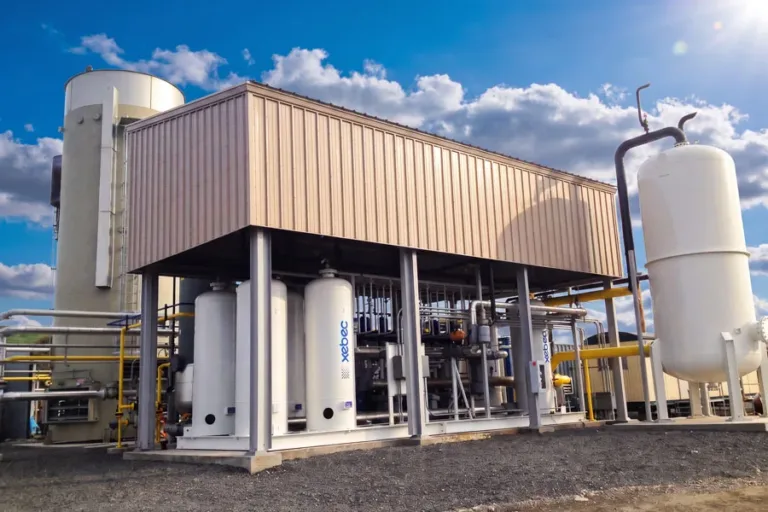
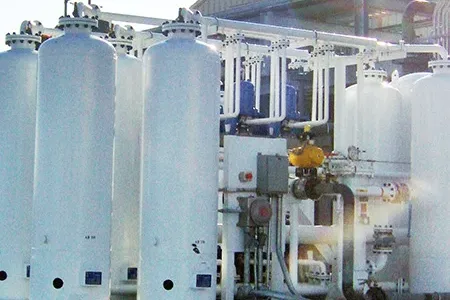
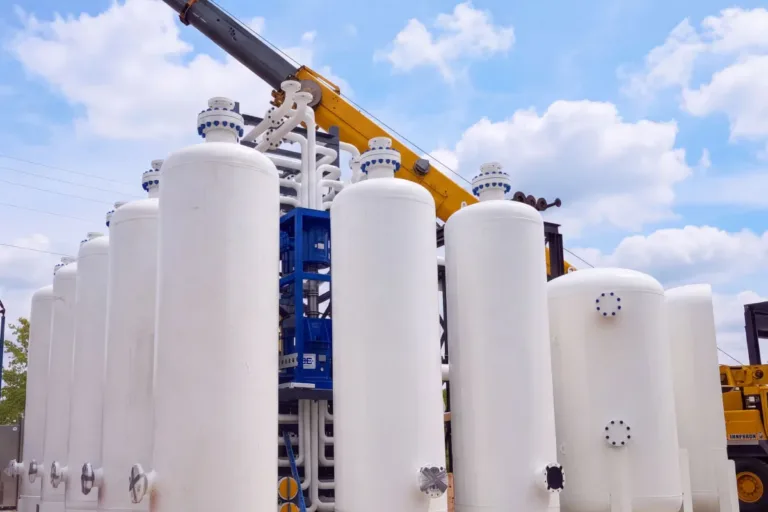
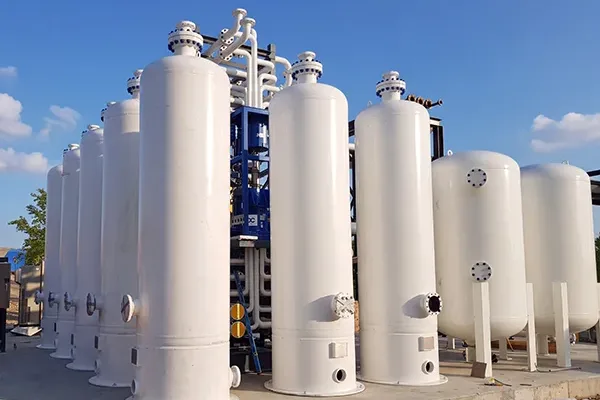
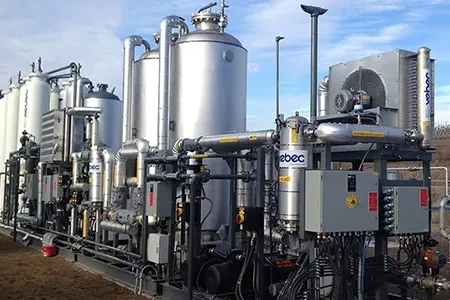
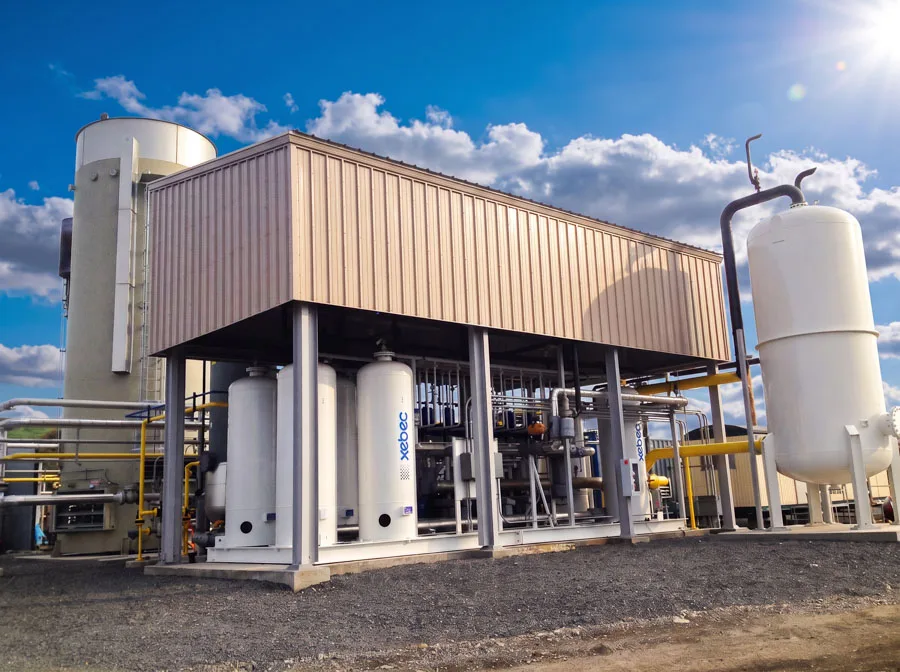
At Waste Management’s American Landfill in Waynesburg, Ohio, an IVYS fast-cycle Pressure Swing Adsorption (PSA) system sits between the third and fourth stages of a gas compressor and removes the bulk of the CO2 from 3,000 SCFM of landfill gas before the gas is sent by pipeline to the local utility for blending and injection.
WM (Waste Management) owns American Landfill and operates its RNG plant. IVYS, then Xebec Adsorption, supplied WM with the PSA in 2014, adding CO2 removal to the plant’s existing compressor train.
The Challenge: Fitting CO2 Removal into an Existing Gas Train
The raw gas is typical of a mature landfill, containing about 52% CH4, 36% CO2, 9–11% N2 from air drawn into the wells, and 50 ppm H2S. WM needed CO2 removal that would integrate with its existing gas systems and accommodate variable landfill gas flow as the site ages.
The Solution: A Rotary-Valve PSA Between Compressor Stages
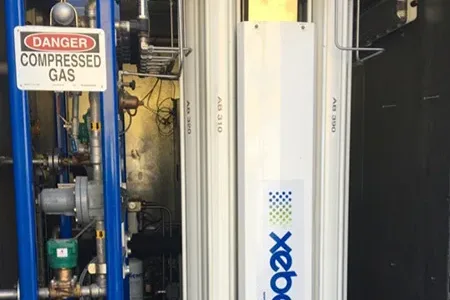
The IVYS rapid-cycle PSA integrates with WM’s existing gas train. The PSA reduces CO2 concentrations from 36% to below 2%, removing approximately 97% of the CO2 in a single step.
Because the PSA targets CO2 as designed by the customer, most of the N2 drawn into the wellfield passes through alongside the methane, resulting in a design product containing approximately 83% CH4.
Why It Matters for Landfill Operators
American Landfill shows a PSA working in coordination with existing equipment to create an upgrading plant.
- Integrates with existing equipment: runs between compressor stages and reuses the site’s blowers and compressors.
- Heavy lifting on CO2: takes landfill gas from 36% to under 2% CO2 in a single pass.