Municipal solid waste at landfill sites is more than garbage—it’s a potential energy resource.

As organic material decomposes in landfills, it generates methane, a potent greenhouse gas. When captured and upgraded, this methane becomes renewable natural gas (RNG): a pipeline-ready fuel, interchangeable with traditional natural gas, that cuts emissions, diverts waste, and turns everyday trash into a valuable, low-carbon energy source.

At the same time, landfill gas is one of the most demanding biogas sources for upgrading to RNG, characterized by highly variable composition, elevated VOCs and siloxanes, and often high nitrogen levels resulting from air intrusion into the gas collection system.
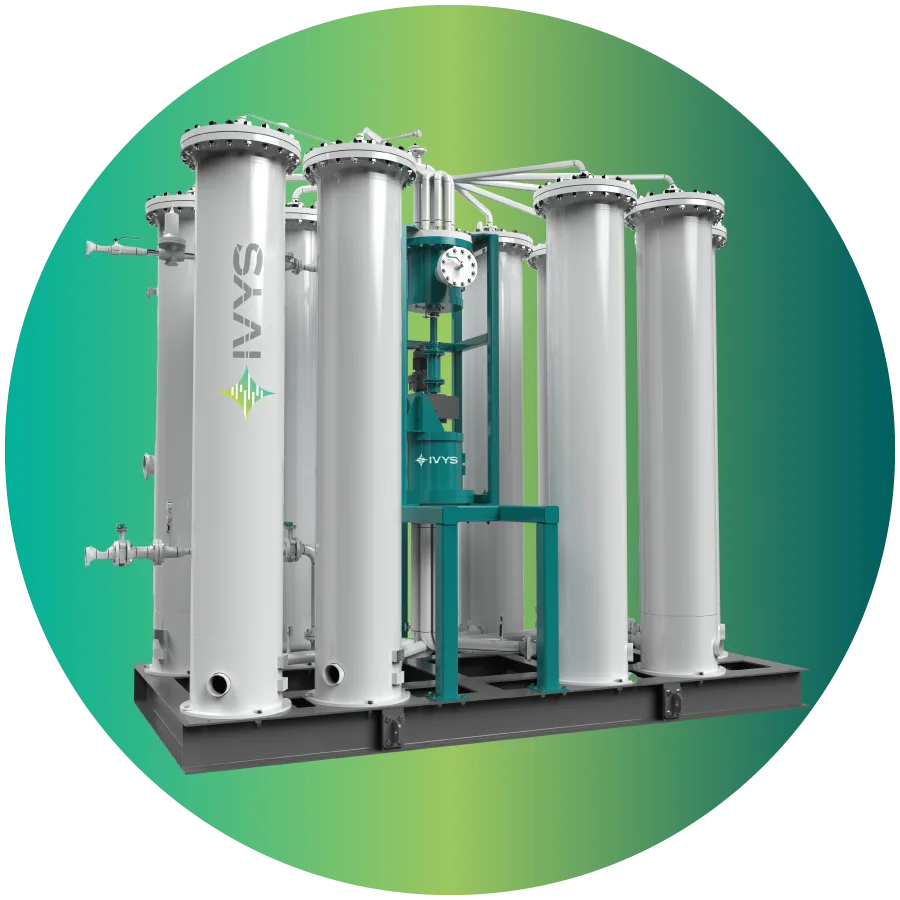
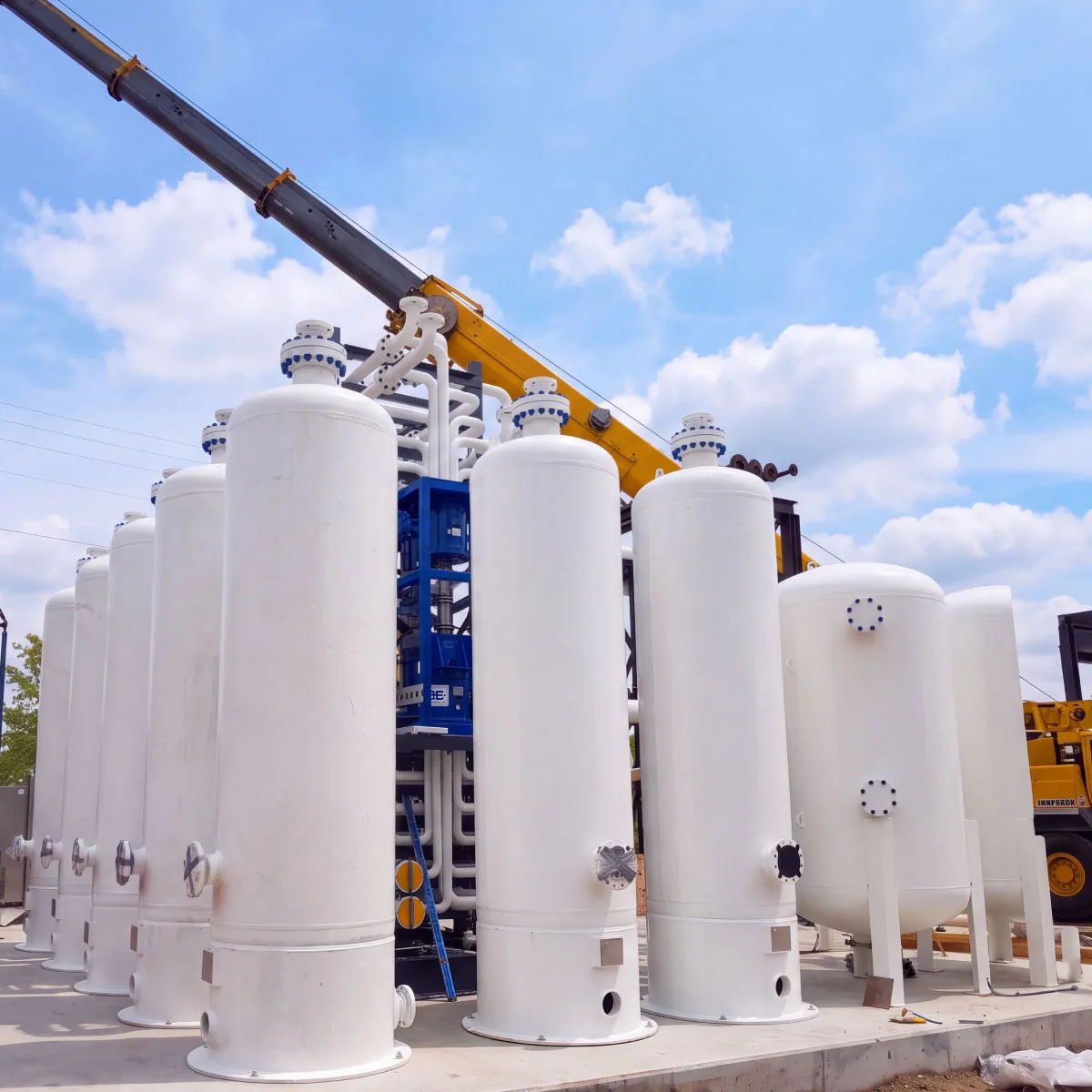
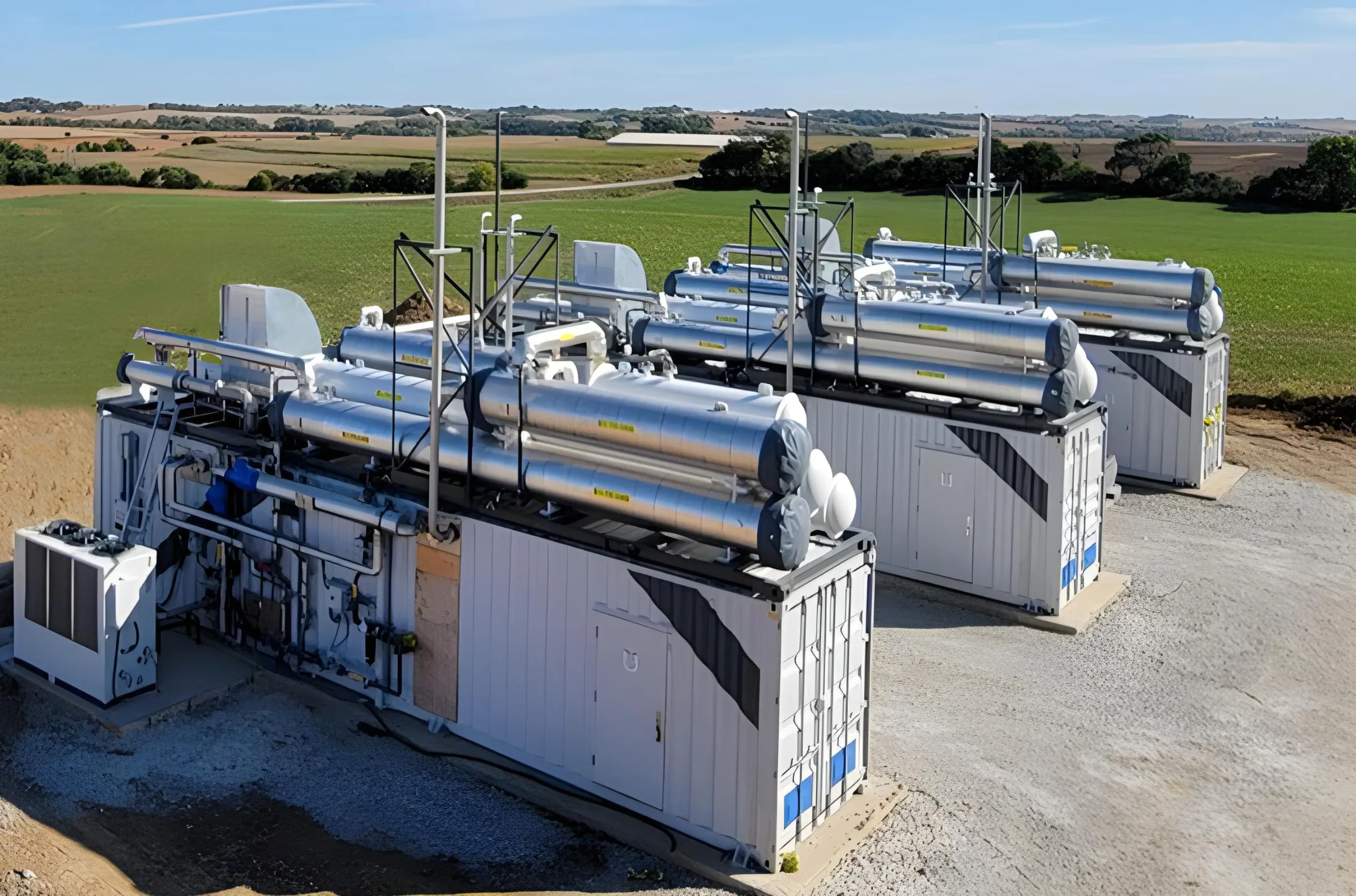
IVYS Adsorption PSA systems are purpose-built to meet these challenges through a modular and highly configurable design. Solutions can range from a single PSA stage for CO2, O2 , and N2  removal to multi-stage PSA configurations, including dedicated Nitrogen Rejection Units (NRUs), enabling consistent methane purity even under high nitrogen dilution. IVYS systems can also incorporate a Secondary Recovery Unit (SRU) to capture methane that would otherwise be lost in off-gas streams, maximizing overall methane recovery and improving project economics.

This flexible, scalable approach allows IVYS PSA solutions to adapt as landfill gas quality evolves over time, delivering reliable performance, high methane yields, and long-term operational resilience in demanding landfill gas applications.

PSA for RNG upgrading from Landfill gas

Treating Landfill Gas – The process

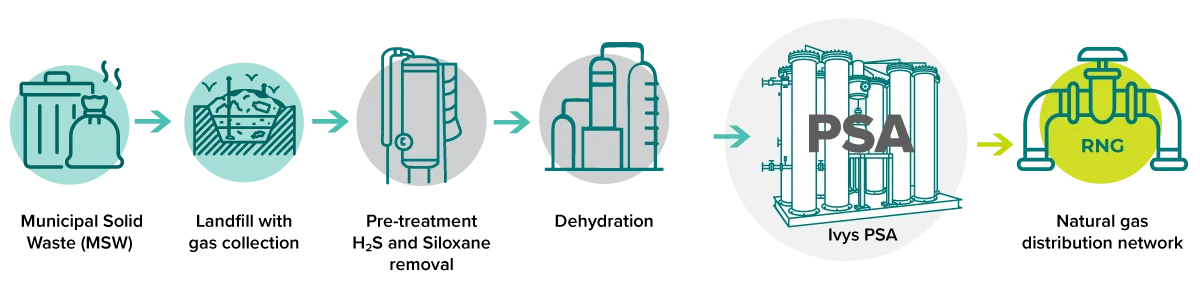
Conditioning biogas to RNG/BioCNG purity means removing water, carbon dioxide, hydrogen sulfide and other trace elements, not just the bulk separation step to concentrate methane. Every PSA is only as reliable as the gas reaching it, so Ivys designs the full train.

The process of treating landfill gas for RNG production using Ivys's PSA

Moisture removal

Chilling and drying to bring saturated field gas to a stable dew point, protecting downstream adsorbents from liquid carryover. Moisture, siloxane and sulfur removal are the standard first steps at landfill sites.

H₂S removal

Activated carbon or iron-based media sized to the site’s measured loading and target changeout interval, not to a generic rule of thumb.

Siloxane & VOC polishing

Specialty adsorbent beds that remove siloxanes and halogenated compounds ahead of the PSA and downstream compression.

Deoxygenation

Tariff oxygen limits are tight: typically 0.2 % by volume under California’s Rule 30, and 0.1 % or lower on some U.S. systems. The Ivys PSA removes oxygen by adsorption as part of the upgrading step. Where feed oxygen exceeds what the PSA can carry, catalytic removal is integrated into the train.

Upgrading with Ivys’s Fast-Cycle Rotary Valve PSA

Fast-cycle rotary-valve PSA with advanced adsorbents, designed to hold product spec through the flow and composition swings a wellfield actually delivers.

Product injection

Final metering to the interconnect, including odorization, pressure regulation, valving, gas nomination and gas-quality monitoring to the pipeline’s requirements.

Landfill gas is not digester gas

Landfill and digester gas differ fundamentally in how the methane is captured. Landfills generate methane passively, as buried waste decomposes over decades, requiring an engineered network of wells to intercept gas that would otherwise escape uncontrolled. A gas collection system extracts gas from the waste mass under vacuum, which also draws air through the cover, side slopes, and wellfield. In the US and other locations, operators monitor both surface emissions and individual wellheads for methane, oxygen, nitrogen, temperature, and pressure to ensure system efficiency and prevent excess air intake. Operators also track gas flow rates, report these figures, and implement corrective measures if any readings exceed specified limits.

Digester gas, by contrast, is produced within sealed, engineered tanks under controlled conditions, allowing near-total capture and consistent methane content.

Every landfill project must address three key aspects that a digester project does not.

Nitrogen and oxygen

Air intrusion introduces N₂ and O₂, and pipeline injection requirements are unforgiving about both. SoCalGas Rule 30 in California, a widely referenced benchmark, caps total inerts (CO₂, N₂ and O₂ combined) at 4 % by volume, oxygen at 0.2 %, and sets a minimum heating value of 990 Btu/scf. Only so much nitrogen can be removed in a single stage. How much nitrogen the wellfield delivers is what sets the number of PSA separation stages, and the number of stages is the single biggest driver of upgrading capex on a landfill.

Trace contaminants

Landfill gas isn’t just methane and CO2 — it also carries a range of trace contaminants formed as diverse waste, including electronics, personal care products, cleaning agents, plastics, and construction debris, breaks down together. Siloxanes, from products like cosmetics, deodorants, and cleaning agents, when burned, form abrasive silica (glass-like) deposits that damage engines, turbines, and upgrading equipment. Halogenated compounds from solvents, plastics, and aerosols, when combusted, can form corrosive acids (like hydrochloric acid) that damage equipment and pipelines. The levels of these components can differ widely as the field develops. California mandates that biomethane injected into a common-carrier pipeline must comply with limits on 17 specific landfill gas constituents.

A moving target

Gas quantity and composition depend on waste type and age, organic content, moisture, and temperature—all of which change over a landfill’s life. Moisture has an ideal range: too little slows decomposition, while too much leaves free liquid that can flood wells and header piping. Gas flow and composition vary from year one to year 10 and beyond. A plant designed only for day-one LFG conditions may underperform by year five.

Nitrogen decides the configuration

The landfill gas upgrading system should be designed according to nitrogen levels. Pre-treatment processes can eliminate moisture, H₂S, and siloxanes from the feed gas. Ivys offers pre-configured solutions tailored for landfill gas upgrading across three nitrogen content ranges.

Modular design for gas changes

New modules can be added as required based on regulations or changes in the landfill over time. This allows the waste manager flexibility to prepare for the future while reducing CAPEX.

Feed N₂
(mol %, dry)
Ivys modular options How it works What it means for the project
Under 4 % Single-stage PSA Biostream or Skidmount One PSA train removes CO₂, N₂ and O₂, with the residual inerts passing through below the pipeline specification. Lowest capex, lowest parasitic load, smallest footprint. Fully modular and scalable by adding trains as the field grows.
4 % to 8 % Two-stage PSA Staged trains with recycle A second adsorption stage treats the enriched product from the first, rejecting inerts while methane in the intermediate cut is recycled to the front end. Meets pipeline spec without cryogenics. Higher recompression duty than a single stage, but materially lower cost than a dedicated nitrogen rejection unit.
Over 8 % PSA + NRU Dedicated nitrogen rejection The PSA removes bulk CO₂; a downstream nitrogen rejection unit strips nitrogen to the level the tariff requires and returns methane-rich product to the injection skid. Handles aged and over-pulled wellfields that cannot be corrected at the source. Highest capex and power draw, and the reason the wellfield deserves a hard look first.

These nitrogen ranges serve as a preliminary screening guide for projects. However, selecting an optimized landfill gas upgrade solution also depends on factors such as feed methane concentration, oxygen levels, acceptable inert levels, and heating-value limits specified in your interconnect agreement. These factors can differ significantly across pipelines and regions. Additionally, any solution should account for expected changes in the wellfield throughout the project’s lifespan.

Single-Stage

Under 4% N2

Landfill gas

Pretreatment

H2O · H2S · siloxanes

↓

PSA

CO2 · N2 · O2 removal

↓

RNG

to pipeline

Two-Stage

4–8% N2

Landfill gas

Pretreatment

H2O · H2S · siloxanes

↓

PSA Stage 1

CO2 · N2 · O2

↓

PSA Stage 2

additional inert removal

↓

RNG

to pipeline

PSA + NRU

Over 8% N2

Landfill gas

Pretreatment

H2O · H2S · siloxanes

↓

PSA

CO2 · N2 · O2

↓

NRU

nitrogen rejection

↓

RNG

to pipeline

96% – 99+%

CH4 Purity

20+

YEARS
lifetime reliability

90+%

Total LFG Upgrading Methane Recovery

10-20+

YEARS
PSA adsorbent lifetime

100+

Biogas Installations Globally

2006

First
LFG installation

Purely DrivenPurely DrivenPurely Driven
People. Stories. Events.