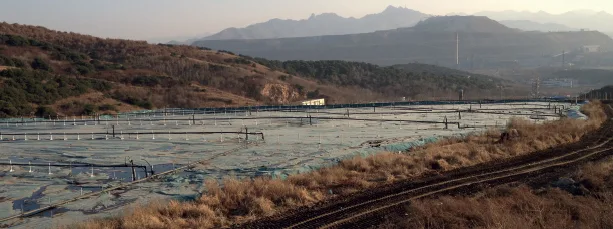
Anshan, Liaoning, China
Landfill Gas Upgrading to CNG for Taxi Refuelling
Project details
Technology: Fast-cycle PSA with N₂/O₂ rejection, plus balance of plant
Commissioned: 2015
Biogas Source: Landfill
End Use: CNG for taxi refuelling
Specifications
Capacity: 743 Nm³/h / 462 SCFM
Raw Gas Composition: 56.5% CH₄, 39.5% CO₂,
3% N₂, 1% O₂, 50 ppm H₂S, 100% RH
Design Specifications RNG / Biomethane: 98% CH₄, 0.11% CO₂,
1.44% N₂, 0.48% O₂
Power Consumption of Biogas Upgrading Plant:
Approx. 300 kW for the complete upgrading plant
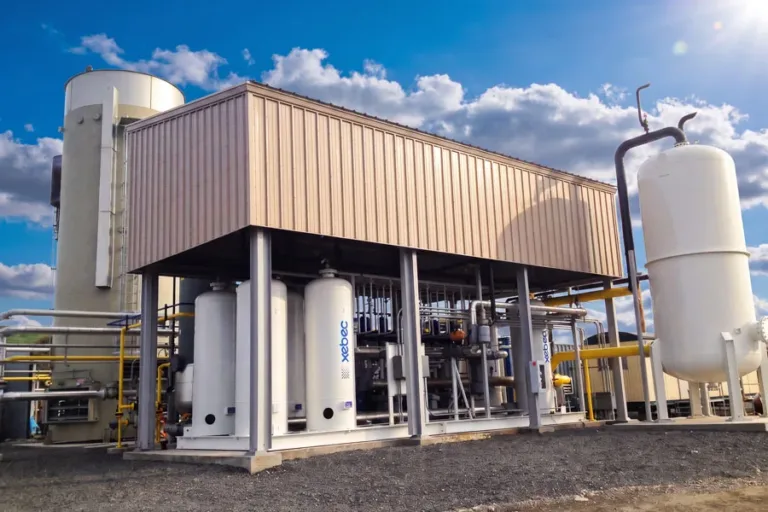
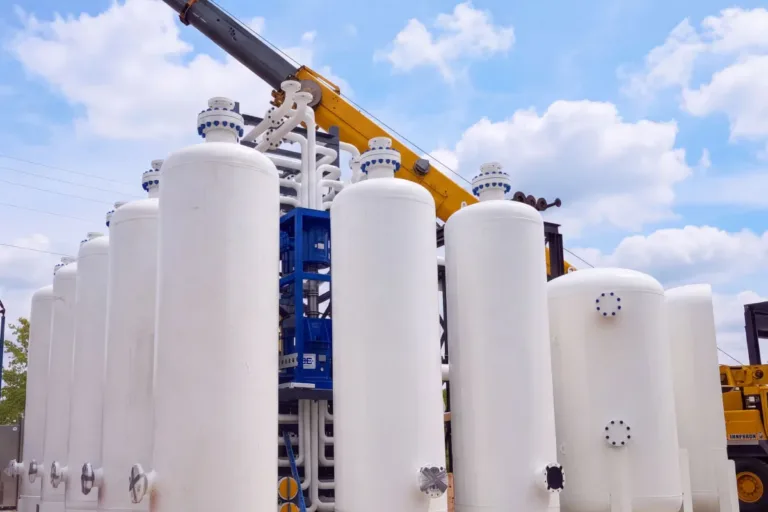
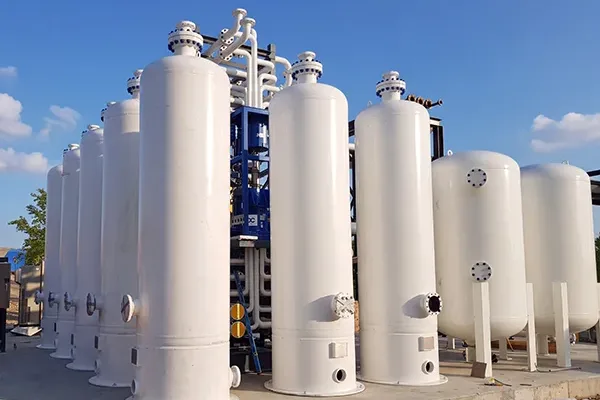
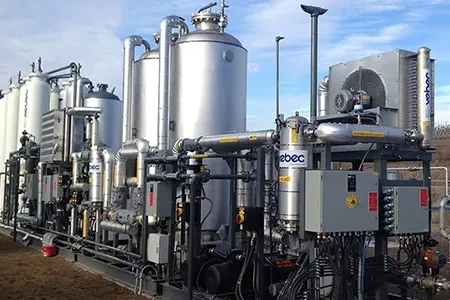
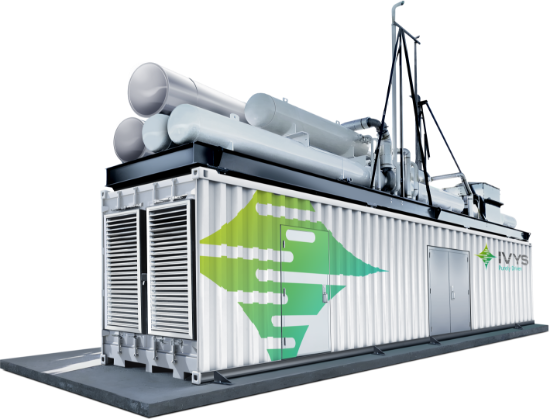
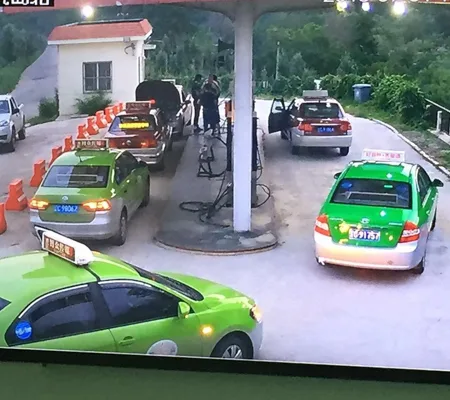
A landfill in Anshan, Liaoning Province, uses an IVYS fast-cycle Pressure Swing Adsorption (PSA) system with N₂/O₂ rejection to upgrade landfill gas to up to 98.6% CH₄ — compressed natural gas (CNG) that fuels the city’s taxi fleet.
The Challenge: Vehicle-Grade Fuel from Variable Landfill Gas
Most landfill gas projects in China were built to generate electricity. As CNG prices in the Chinese transportation sector rose, landfill operators began looking at upgrading their gas to higher-value vehicle fuel instead.
Beijing Golden Green Environmental Engineering & Technical Co., Ltd., a firm specializing in landfill engineering and remediation, set out to do exactly that at a landfill in Anshan, in northeast China. The target market was the city’s natural gas taxi fleet.
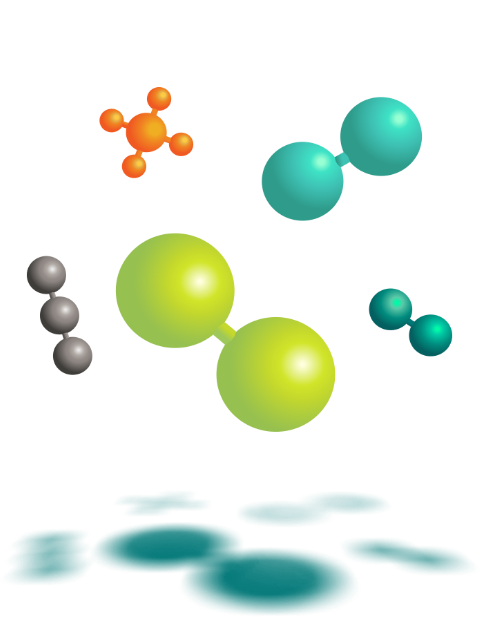
Landfill gas is the hardest biogas to upgrade. At Anshan, the raw gas carries about 56.5% CH₄ and 39.5% CO₂, but also 3% N₂ and 1% O₂ from air drawn into the well field, and it arrives saturated with water. Nitrogen and oxygen are difficult to separate from methane, and both flow and composition swing as well-field conditions change. The upgrading system had to remove all of these while keeping methane recovery high enough for the project to be profitable.
The IVYS Solution at Anshan
Golden Green chose an IVYS fast-cycle PSA system including full balance of the upgrading plant. It was the company’s second upgrading order under a distribution agreement covering medium-sized Chinese landfills, and the system was scheduled for installation in early 2013.
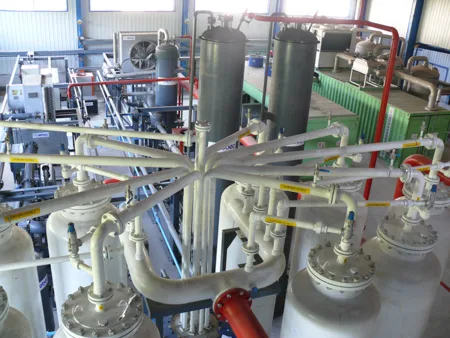
The system was assembled and integrated to Chinese code and certification requirements. In one PSA step, it removes CO₂, N₂, and O₂ after water and contaminants are removed.
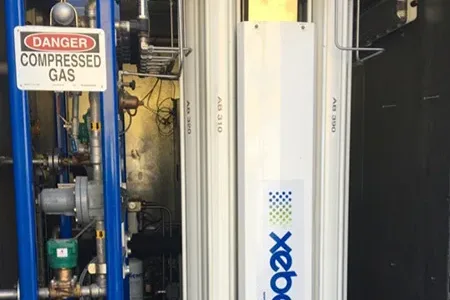
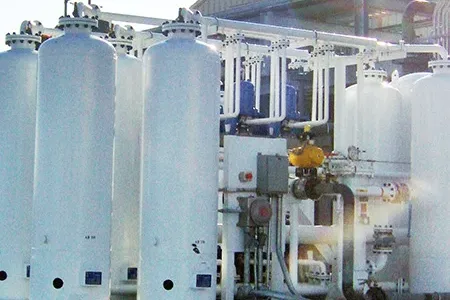
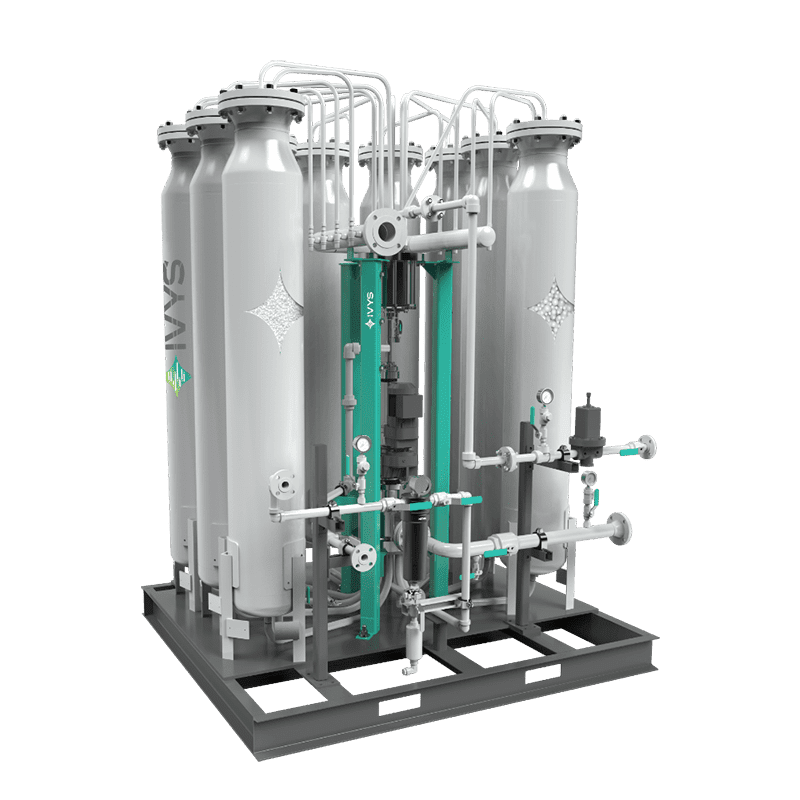
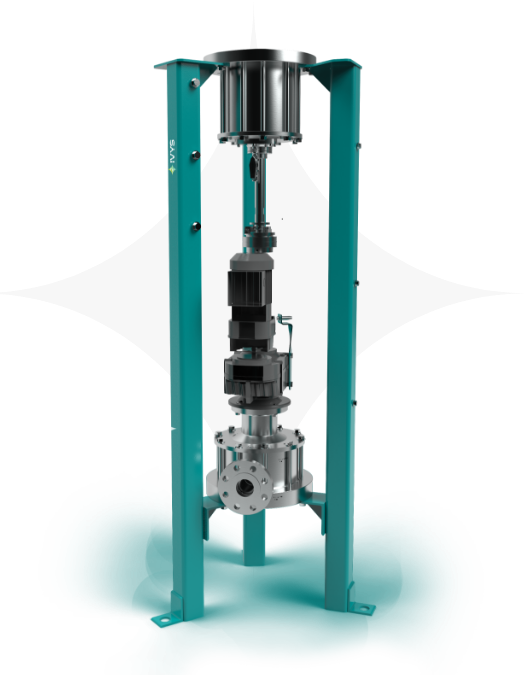
Fast cycling lets each adsorbent bed do more work, so the plant needs less adsorbent and a smaller footprint than conventional PSA. Rotary valves replace the large banks of switching valves found on conventional PSA units, cutting maintenance and operating cost with a more reliable system.
Results: More Gas, Higher Purity Than Expected
The plant began commercial operation in 2015, producing CNG for natural gas taxis in Anshan. The owner reports that output exceeded its expectations in both volume and quality.
The project also gives landfill operators a working reference for a key question: can PSA hold product quality when N₂ and O₂ levels in the feed change? At Anshan, the kinetic process continuously adjusts to varying N₂ and O₂ while keeping recovery between 83% and 91%.
In the operator’s words
“Xebec’s upgrading system performance is excellent, delivering gas quantities and qualities which are higher and purer than we expected. This allows us to sell more high quality gas to our customers, making this investment very attractive for us.”
— Luo Yong, Chairman, Beijing Golden Green Environmental Engineering & Technology Co., Ltd.
Why It Matters for Landfill Operators
- N₂ and O₂ rejection in the PSA step: adsorption removes CO₂, nitrogen and oxygen from methane, a common limit on landfill gas quality.
- Stable output under variable feed: 94–98.6% CH₄ across a 500–1,300 m³/h feed range.
- High methane recovery: 83–91% even while rejecting N₂ and O₂.
- Compact, skid-mounted design: fast cycling reduces adsorbent volume and footprint.
- Built to local code: assembled and certified to Chinese requirements at a regional facility.
- A higher-value product: vehicle fuel rather than grid electricity.