Labessière-Candeil (Tarn), France
Landfill Gas Upgrading to Vehicle Fuel
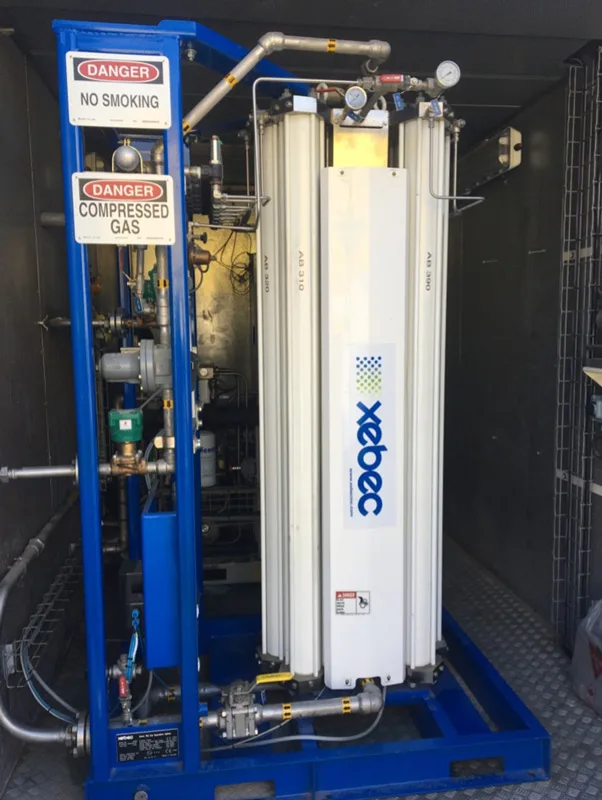
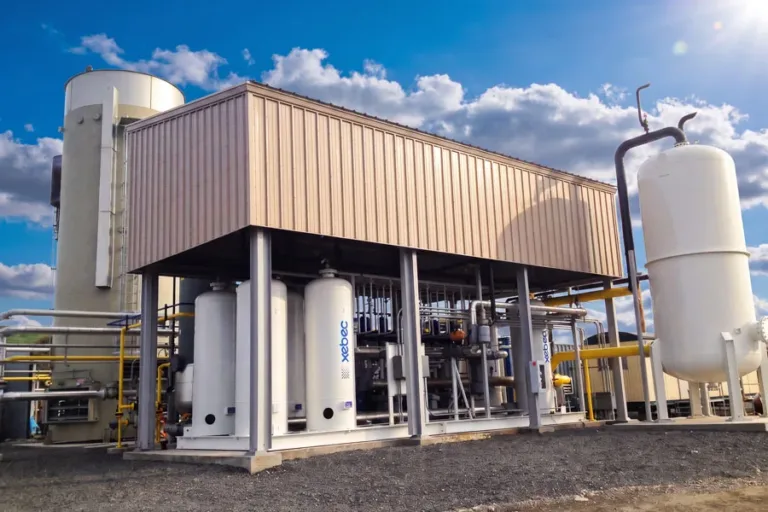
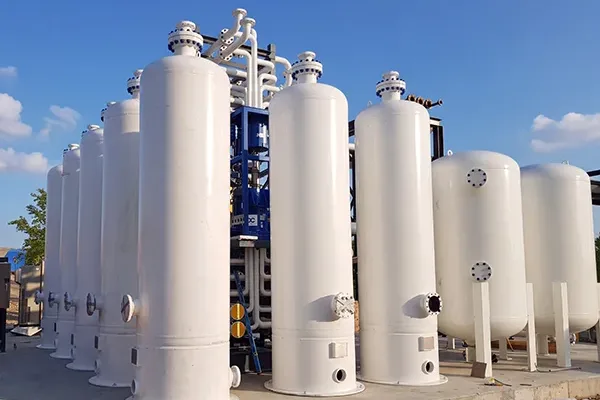
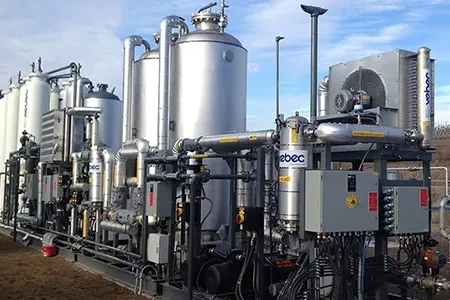
Single-stage PSA unit at the Trifyl site
Project details
Technology: Single-stage PSA
Commissioned: 2010
Biogas Source: Landfill (bioreactor)
Usage: Vehicle fuel (local refuelling)
Specifications
Capacity: 60 Nm³/h (37 SCFM)
Raw Gas Composition: 54.9% CH₄, 40% CO₂,
4% N₂, 1% O₂, <50 ppm H₂S, 100%RH
Design Specifications RNG / Biomethane: 88% CH₄, 3% CO₂,
7.1% N₂, 1.9% O₂
Power Consumption of Biogas Upgrading Plant:
0.42 – 0.48 kW/scfm (0.26 – 0.30 kWh/NCM) raw biogas
The challenge
At Labessière-Candeil, public waste authority Trifyl saw more than a landfill: it saw a source of renewable energy. Serving 358 communes and nearly 330,000 residents across France’s Tarn region, the sealed bioreactor site handles 180,000 tonnes of waste each year. By recirculating leachate, it speeds decomposition and produces 900 m³/h of biogas. Most of this powers a 3.6 MW cogeneration plant, but Trifyl wanted to take the circular economy a step further by fueling its vehicles with gas produced on site.
The solution
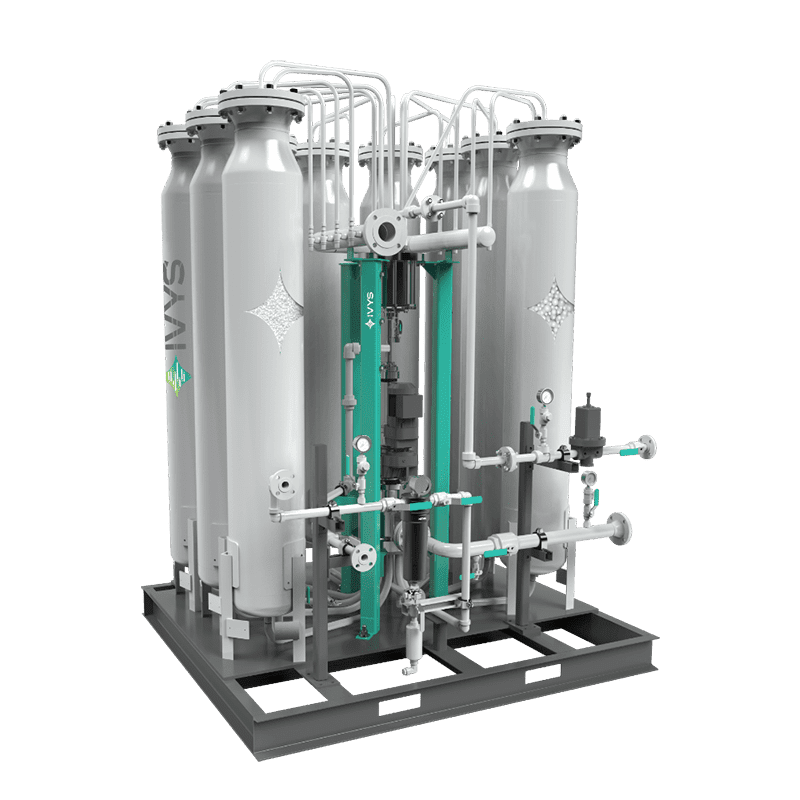
In 2011, Ivys Adsorption (formerly Xebec) partner VerdeMobil commissioned a compact, efficient M-3200 rapid-cycle pressure-swing adsorption (PSA) system. Using rotary valves to cycle its adsorption beds, the unit removes CO₂ and upgrades landfill gas to vehicle-grade biomethane as Compressed Natural Gas or CNG.
The impact
With a production capacity of 35 Nm³/h, the system produced up to 52,000 Nm³ of bioGNV annually, equivalent in energy to 52,000 litres of diesel (about 13,700 diesel gallon equivalents, or DGE). The renewable fuel powered Trifyl’s fleet; in 2012 alone, its biomethane-fuelled roll-off truck travelled 27,000 km.
From biomethane to renewable hydrogen
Trifyl continued to innovate. In 2014, the upgraded gas supplied a reformer and a second Xebec PSA. The hydrogen purification system achieved 99.999% purity and was announced by Xebec as Europe’s first system to purify renewable hydrogen produced from biogas.